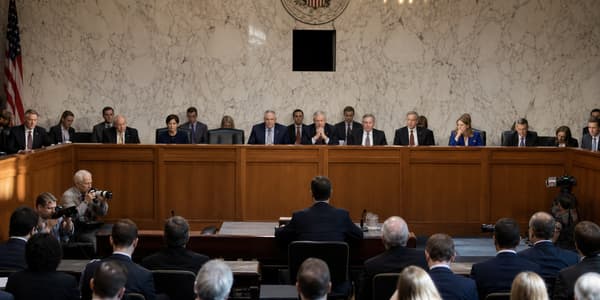
A Delaware judge ruled Google must face conservative activist Robby Starbuck's defamation lawsuit over AI chatbot outputs that falsely branded him a child rapist and a shooter.
Robby Starbuck sued Google last October for at least $15 million. He said the company's Bard AI chatbot told users he was a "child rapist," a "serial sexual abuser" and a "shooter," and falsely tied him to white nationalist Richard Spencer. On July 24, Delaware Superior Court Judge Meghan Adams refused to throw the case out. It moves to discovery.
Google asked Adams to dismiss the suit outright. She declined, finding Starbuck's allegations "sufficiently well-pled to proceed to discovery and flesh out the allegations" and enough, at this stage, to support a claim for emotional distress damages, according to Bloomberg Law and Fox News, which both reviewed the ruling.
Adams didn't pretend this was a routine defamation case. She wrote that the dispute opens "a new frontier for defamation law, in which artificial intelligence tools are allegedly employed to effectuate the defamatory ends of their makers." That line is the whole ballgame. Courts have spent thirty years figuring out who's liable when a person writes something false. Nobody has settled who's liable when a machine invents it and hands it to millions of people who never asked for a second opinion.
Starbuck is a conservative activist known for pressuring major corporations, including Google, Target and John Deere, to drop diversity, equity and inclusion programs. He says the AI-generated smears surfaced repeatedly through Google's tools and reached a wide audience before he could do anything about it. His suit calls the false claims "AI hallucinations," the term the industry itself uses for confident, fabricated output. Calling a real person a child rapist isn't a quirky glitch. It's the kind of claim that ends careers and friendships regardless of whether a human or an algorithm typed it.
Google has not been quoted responding to the specifics of Wednesday's ruling. The company has previously acknowledged that its AI tools can produce inaccurate information and has said it works to reduce those errors, though it has not conceded legal liability for the Starbuck claims. PRN reached out to Google for comment on the ruling and will update this story with any response.
Why conservatives are watching this one
Starbuck isn't the only right-of-center figure to say Silicon Valley's AI tools single him out for the worst treatment their models can generate. Google's own Gemini chatbot drew bipartisan criticism last year after it produced historically inaccurate images and, separately, after users found it dodging or distorting questions about conservative figures while answering similarly phrased questions about people on the left without hesitation. Starbuck has said publicly that his case isn't really about him. It's about whether a handful of companies building tools used by billions of people can hide behind the word "hallucination" when those tools invent felonies that never happened.
That's the question Delaware's court system will now spend months, maybe years, working through. Discovery means Google's internal records on how Bard generated those claims, what testing it ran before release, and what it knew about the errors, all become fair game for Starbuck's lawyers to request. Tech companies have fought hard to keep exactly that kind of material sealed.
The case also lands at a moment when Congress and state legislatures are debating whether Section 230, the law that shields platforms from liability for user-posted content, should extend to content a company's own AI generates on its own. Google has generally argued its AI outputs deserve strong First Amendment and liability protections similar to search results. Adams' ruling doesn't resolve that fight. It just says Starbuck gets to keep asking the question in open court.
Discovery in cases like this typically runs a year or more before trial. Expect Google to keep fighting on narrower grounds even as it hands over records, and expect other plaintiffs with similar AI-hallucination complaints to watch Delaware closely. If Starbuck wins, it becomes the first real precedent for holding an AI company directly liable for what its chatbot invents about a real person. If he loses, Big Tech gets a template for arguing that a machine's false statement isn't legally the company's statement at all. Either way, this is the case that answers it first.
Also read: FCC Chairman Says ABC's Trump Speech Snub Will Factor Into License Review • DOJ subpoenas four NYT reporters over leak behind Air Force One story • Cecilia Vega Was Profiling a Sanctioned UN Antisemite When CBS Cut Her Loose