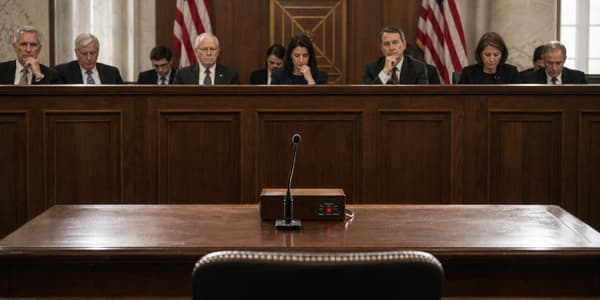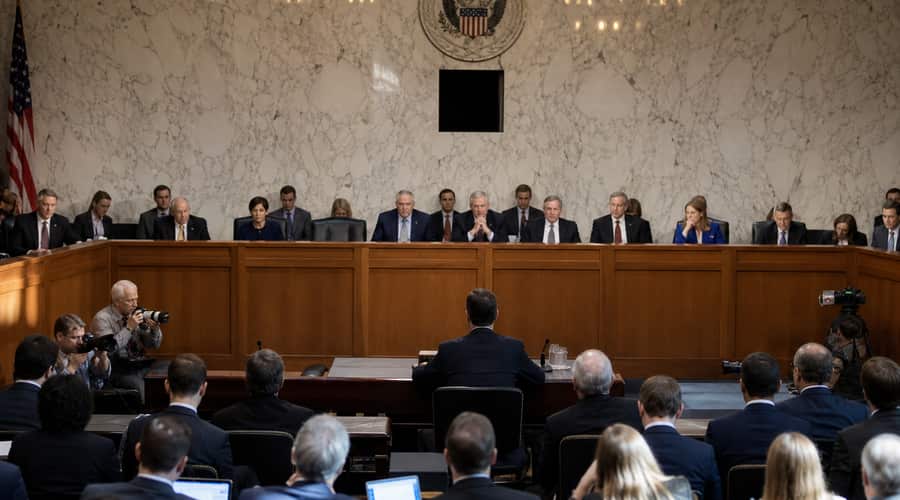
Acting Attorney General Todd Blanche told the Senate Judiciary Committee Wednesday that the Epstein investigation is not over, promising indictments against anyone new the files turn up.
"There are no closed investigations," Blanche said, seated before the committee weighing his nomination to serve as full attorney general. "If we learn today, if we learn next week, if we learn next month that there's an individual that we can investigate, indict and prosecute out of the Epstein files, you better believe it, we will."
That is a direct answer to a question Democrats have been asking for months: did the Trump Justice Department quietly shut the book on Jeffrey Epstein once the Epstein and Ghislaine Maxwell prosecutions concluded? Blanche's answer was no. He drew a clear line between those two completed cases and the department's ongoing willingness to chase any name the files still produce.
Blanche did not walk into the hearing with a clean slate. He acknowledged, under questioning, that mistakes were made when the department released the Epstein files, and he apologized to survivors whose personal information went out unredacted. He stopped short of committing to meet with victims personally, a point Democrats pressed hard.
He pushed back on the idea that the department has been indifferent to the women Epstein victimized. Justice Department officials have met with representatives of more than 30 victims since the review began, Blanche said, adding a blunt promise: "We will never not do everything we can to prosecute anybody that committed any crimes against any of these women." He also argued the administration has released more material than any prior White House, calling it a record of transparency rather than concealment.
The record is not spotless. A federal judge ruled in late June that Blanche had conceded the department violated the Epstein Files Transparency Act by failing to substantively answer claims that files were withheld or over-redacted. Rep. Thomas Massie, the Kentucky Republican who helped push that transparency law through Congress, joined Rep. Ro Khanna in a July 9 letter accusing the department of slow-walking releases and burying material under broad redactions. That bipartisan pressure, from a Republican no less, is the backdrop against which Blanche made his promise Wednesday.
Democrats press, Republicans stay wary
Democrats on the committee came in loaded with questions less about Epstein alone and more about a pattern: the targeting of Trump's political opponents and what critics call the politicization of the department Blanche would run. CNN reported ahead of the hearing that Democrats were setting traps aimed at his record as Trump's former personal defense lawyer, a background that gives skeptics on both sides of the aisle reason to scrutinize his independence.
Republicans on the panel were not uniformly welcoming either. Blanche needed the hearing to shore up support from GOP senators who have expressed their own reservations, according to reporting from The Washington Post, making this less a rubber stamp than a genuine test of whether he has the votes.
What matters for the Epstein question specifically is that Blanche put a public, on-the-record commitment behind a promise that is easy to make and hard to keep. Naming a suspect requires evidence the department either already has or has to develop, and Congress, survivors' attorneys, and reporters like Massie and Khanna will be watching for whether the next months produce an actual name or another round of redacted documents.
The committee's vote on Blanche's nomination has not been scheduled. Whether he clears it will depend on how many Republicans he satisfies and how much Democrats can make the Epstein files a liability rather than a talking point he has already answered. Either way, Blanche has now put his own words on record: no closed cases, no free pass, and a promise that will be measured against whatever the department does next.
Also read: House Votes 308-117 to Make Daylight Saving Time Permanent • Blanche Enters His Confirmation Hearing Backed by 670,000 Officers • House conservatives end blockade as Johnson strikes voter ID deal