Todd Blanche opened his Senate confirmation hearing this week with police unions representing hundreds of thousands of officers and more than 100 former Justice Department officials standing behind him, even as Democrats and a federal judge take direct aim at his record.
Todd Blanche, President Donald Trump's nominee to serve as the nation's 88th attorney general, sat down Wednesday morning before the Senate Judiciary Committee carrying an endorsement list few nominees ever collect. The National Association of Police Organizations, which represents more than 250,000 sworn officers, and the Fraternal Order of Police, with more than 382,000 members, both sent the committee letters backing him. So did the Western States Sheriffs' Association, 23 state attorneys general, and a bipartisan group Sen. Chuck Grassley's office puts at more than 100 former U.S. attorneys and Justice Department officials who served under presidents going back to Ronald Reagan.
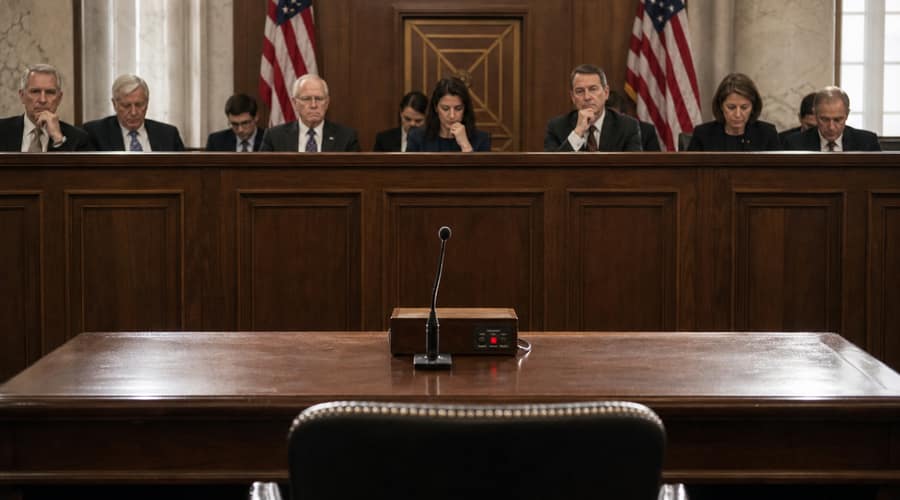
The two-day hearing, gaveled in by Grassley, the Iowa Republican who chairs the committee, and running through Thursday with ranking member Dick Durbin of Illinois leading the opposition, is Blanche's formal audition for a job he has already been doing. Trump fired Pam Bondi as attorney general in April amid criticism of her handling of the Jeffrey Epstein files and elevated Blanche, then the deputy attorney general, to acting AG. If confirmed, he becomes the fourth attorney general to serve under Trump across his two terms, following Jeff Sessions, William Barr and Bondi.
The Fraternal Order of Police told the committee it believes Blanche's leadership "will help ensure that the Department of Justice remains focused on public safety, the rule of law, and providing unwavering support for the law enforcement professionals who risk their lives daily to protect our families and communities." The 23 attorneys general struck a similar note, writing that "at a time when Americans expect their government to protect communities from violent crime, narcotics trafficking, human trafficking, terrorism and organized criminal activity, Todd Blanche has shown the ability to deliver real results." Grassley's office tallied the combined law enforcement support at roughly 670,000 sworn officers once smaller state and local groups are counted.
Former Attorney General William Barr added his own weight in a Wall Street Journal op-ed, calling Blanche "well-qualified" and rejecting the argument that his years as Trump's personal defense lawyer make him too close to the president to run the department. "A successful criminal-defense lawyer like Mr. Blanche isn't a toady who sugarcoats the truth to his client," Barr wrote, arguing senators "should view a trusting relationship as a positive, not a negative." Barr also warned that voting Blanche down would not restrain Trump at all, since the president could simply keep running the department through acting officials.
Democrats Zero In on the IRS Fund and Two Undecided Republicans
Democrats on the committee, led in oversight letters by Sen. Sheldon Whitehouse of Rhode Island, have spent weeks building a case against Blanche centered on two fronts. One is the administration's mass clemency for roughly 1,500 Jan. 6 defendants, including people convicted of assaulting police officers. Blanche told senators during his deputy attorney general hearing last year that people who commit violence against law enforcement "should be prosecuted to the fullest extent of the law," a line that sits uneasily next to his praise for the pardons at the Conservative Political Action Conference in May.
The second front is a proposed 1.8 billion dollar "anti-weaponization" fund tied to Trump's lawsuit against the IRS over the leak of his tax returns, an arrangement meant to compensate Jan. 6 defendants and others who claim the Biden administration targeted them politically. U.S. District Judge Kathleen Williams ruled the 10 billion dollar IRS suit had been filed for an "improper purpose," referred one of the government's lawyers for possible discipline, and wrote that the settlement behind the fund amounted to an attempt to use the court to confer immunity on people tied to the president and earmark taxpayer money for grievances undefined in law. Blanche has since said the department is not moving forward with the fund.
None of it has shaken the law enforcement coalition or most Senate Republicans, but Blanche's margin is not unlimited. Sens. John Cornyn of Texas and Thom Tillis of North Carolina, neither of whom faces voters this fall, have both said they remain undecided. Republicans hold a narrow majority on the Judiciary Committee and in the full Senate, and losing either man's vote would tighten what is otherwise expected to be a straightforward confirmation.
The hearing continues Thursday, with a committee vote to follow before Blanche's nomination reaches the Senate floor. With the Fraternal Order of Police, NAPO and dozens of state attorneys general already on record and Barr making the case publicly, Trump's team believes the coalition gives wavering Republicans enough cover to get to yes. Whether Cornyn and Tillis agree will decide it.
Also read: House conservatives end blockade as Johnson strikes voter ID deal • Consumer prices fell 0.4% in June as inflation cooled to 3.5% • Warsh tells Congress the Fed has no tolerance for elevated inflation