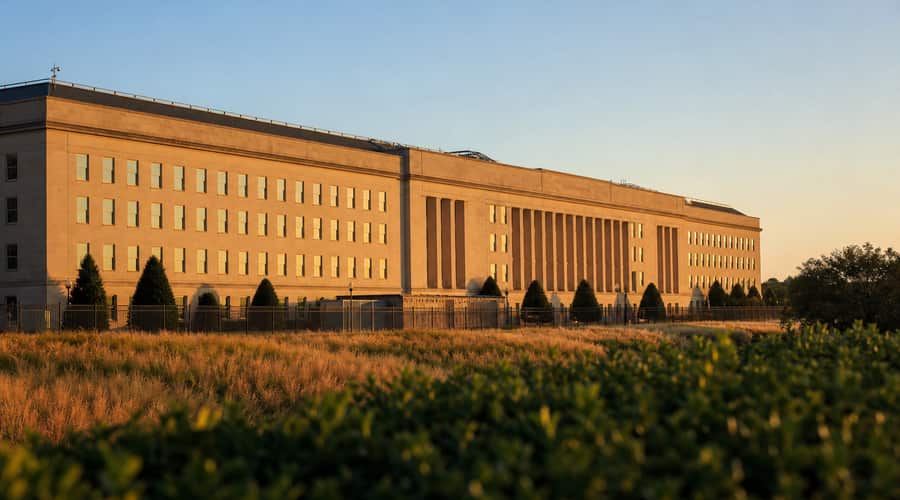
Defense Secretary Pete Hegseth says the Pentagon and Justice Department will now work jointly to find and prosecute officials who leak classified information to reporters.
Pete Hegseth wants leakers found, and he wants them prosecuted. On Monday the defense secretary announced that the Pentagon and the Department of Justice have stood up a joint task force built for exactly that purpose, telling reporters the department will pursue leakers "with the full force of the law." The message was blunt and it was meant to be.
Under the new arrangement, the Pentagon's Office of General Counsel can now request records, support and information from any component of the department tied to a media leak investigation. Every office and every employee, per Hegseth's directive, must treat those requests as a priority and deliver a "full and complete" response within two days. That is a tight clock, and it is meant to be. A leak investigation that used to crawl through interagency channels for weeks now has a hard deadline attached to it.
The timing is not a coincidence. Days before Hegseth's announcement, the DOJ subpoenaed four New York Times reporters, Julian Barnes, Eric Lipton, Tyler Pager and Eric Schmitt, ordering them before a federal grand jury in Manhattan. Federal agents delivered the subpoenas to some of the reporters at their homes on a Friday evening, according to the Times. The story that triggered the probe: the paper's report that the Secret Service had urged President Trump to fly to the NATO summit in Turkey aboard an older Air Force One rather than the Boeing 747 gifted by Qatar, over concerns the donated plane lacked the antimissile countermeasures and other defensive features built into the older aircraft.
That is a story about a hole in the security around the president's own plane, sourced to someone inside the government who was not supposed to talk. Whoever passed that along didn't just embarrass an administration. They handed adversaries a data point about what protections are and are not on the aircraft carrying the commander in chief. That is the kind of leak the task force exists to run down.
Hegseth has been building toward this since he took over the Pentagon. His department has already opened multiple investigations into suspected leakers of classified material and pushed reporters to sign pledges restricting how they solicit information from staff, a policy so unpopular with the press corps that most Pentagon-credentialed reporters turned in their badges rather than sign it. The new task force folds that campaign into something with actual prosecutorial teeth, pairing Pentagon lawyers with DOJ attorneys who can take a case to a grand jury.
Press groups cry foul, DOJ presses on
The Times and press freedom advocates wasted no time pushing back. David McCraw, the paper's top lawyer, called the subpoenas an assault on core constitutional protections, saying "the appearance of federal law enforcement agents on the doorstep of news reporters should shock the conscience of any American who believes in the Constitution and the press freedom it protects." Stephen Adler, chairman of the Reporters Committee for Freedom of the Press, went further, arguing that "when the public's right to know is crushed, as the Trump Administration is trying to do with its subpoenas against The New York Times, all of us suffer irreparable harm, as does the freedom upon which this nation is built."
Those are serious objections from serious people, and readers deserve to hear them stated plainly rather than waved away. But there is a difference between a free press reporting what the public has a right to know and a government employee under oath to protect classified material deciding on their own to hand it to a newsroom instead. The First Amendment protects the Times' right to publish. It has never protected the government official who broke the law to leak in the first place, and that is the person this task force is built to find.
The Pentagon has not said how many active leak investigations the new unit inherited or when the first case might reach a grand jury. Hegseth's two-day response mandate suggests the department wants results fast, not a slow-walked inquiry that fizzles out the way past leak probes often have. What happens next will turn on whether the DOJ can actually make a case stick, whether against a Pentagon staffer or, as the subpoenas suggest, against journalists themselves being pressed to identify a source. Either way, the fight over who answers for the Qatari plane leak, and how far the government can go to find out, is only getting started.
Also read: Zelensky ousts Ukraine's prime minister as Kyiv shifts strategy • Sen. Lindsey Graham dies at 71 after brief and sudden illness • US strikes Iran and revokes oil sanctions relief after tanker attacks