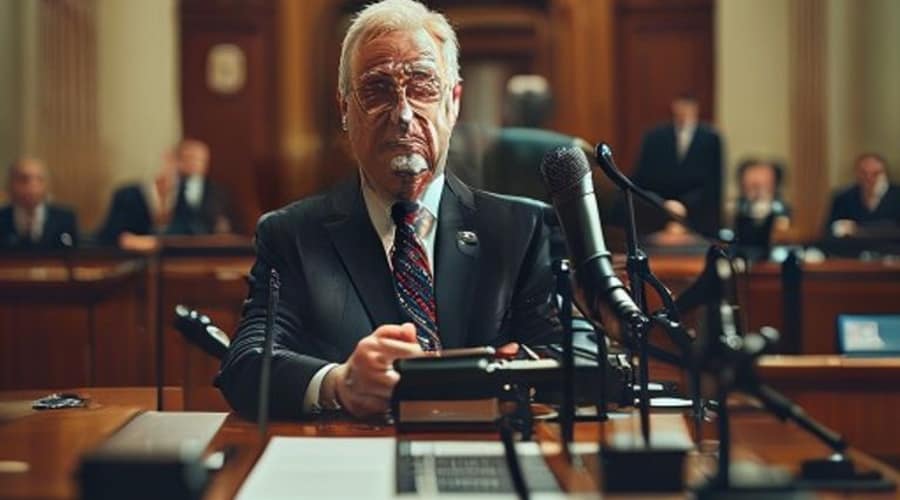
Fed Chairman Kevin Warsh used his first testimony before Congress to promise a hawkish, no-excuses fight against inflation, hours after new data showed price growth cooling faster than Wall Street expected.
Kevin Warsh walked into the House Financial Services Committee on Tuesday and said the quiet part out loud. "The members of our Committee have no tolerance for persistently elevated inflation," he told lawmakers, "and we share a resolute commitment to restoring price stability." He went further than most Fed chairmen dare in prepared remarks, predicting that "if we get policy right, and we will, the inflation surge of the last five years will be a thing of the past." That is not hedged central-bank language. It is a promise, delivered on the record, by a man President Trump nominated to break from the institution's old habits.
The timing did him a favor. The Bureau of Labor Statistics released the June Consumer Price Index report the same morning, and it beat expectations across the board. Headline inflation fell to 3.5% annually, down from 4.2% in May, with prices dropping a seasonally adjusted 0.4% for the month, the sharpest monthly decline since April 2020. Economists had forecast a 0.2% monthly drop and a 3.8% annual rate. Core inflation, which strips out food and energy, held flat for the month and came in at 2.6% year over year, also below the 2.9% consensus. The improvement traced largely to a 5.7% monthly slide in energy prices as a lull in Middle East tensions eased pressure at the pump, even though gasoline is still up 26.7% over the past year.
Anyone who sat through Jerome Powell's testimonies will notice the shift immediately. Powell spent years hedging every sentence with "data dependent" qualifiers and carefully calibrated non-commitments, an approach designed to avoid spooking markets and avoid pinning himself down. Warsh has openly criticized that style. Before taking the chairmanship he called for what he termed "regime change" at the central bank, arguing the Fed had drifted from its mandate and grown too comfortable explaining away inflation instead of confronting it. As chairman, he has already said he intends to lean less on scripted forward guidance, a deliberate break from the Powell-era playbook of telegraphing every move months in advance.
That approach carries risk. Less hand-holding means markets have to work harder to anticipate the Fed's next step, and Tuesday's hearing came against a backdrop of real volatility already in motion. At Warsh's first Federal Open Market Committee meeting in June, the panel left rates unchanged but revised its year-end rate forecast upward, from 3.4% projected in March to 3.8%, with nine of the eighteen policymakers on the committee now penciling in a hike by year's end rather than a cut. That is a stark reversal from March, when the committee as a whole was still forecasting one rate cut in 2026. Stocks sold off on the news, with the Dow dropping 507 points and the S&P 500 falling more than 1%. Traders on the CME FedWatch tool have since pushed the odds of a September rate hike to roughly 49%, nearly double where they stood before the meeting.
An awkward fit for the president who nominated him
The hawkish turn puts Warsh in an uncomfortable spot with the man who put him in the job. Trump pushed hard for Warsh's confirmation after repeatedly attacking Powell for keeping rates too high, and the president has made clear he expects lower borrowing costs, not higher ones. Warsh was confirmed by the Senate in a 54-45 vote, the closest margin for a Fed chair in the modern era, and he has not shown any sign of bending policy to political preference since taking the gavel. That independence, whatever friction it creates with the White House on rates, is precisely what gives his inflation pledge credibility on Capitol Hill.
It also undercuts a talking point Democrats have leaned on all year, that Trump-era trade and economic policy would keep prices climbing. The June numbers say otherwise. Inflation has now fallen for the first time in six years, and it did so under a Fed chairman openly committed to finishing the job rather than managing expectations around an indefinite fight. Whether Warsh's hawkish instincts translate into an actual September rate hike remains to be seen, and it will depend heavily on whether July's inflation data confirms the trend or proves June's drop was a one-month gift from cheaper gasoline. Congress, and markets, will be watching his next move closely, because under Warsh there may be far less warning before it comes.
Also read: Labor Dept sends fraud strike team to New York over $2M daily losses • Toyota Puts $3.6 Billion Into Texas, Shifts Tacoma Work From Mexico • Trump says Walmart will cut ground beef prices nearly 15 percent