The U.S. military struck Iranian radar and air defense sites on June 9 after an Army Apache helicopter was downed near the Strait of Hormuz, and Iran fired back with missiles and drones, putting the April ceasefire under serious strain.
U.S. Central Command launched retaliatory strikes against Iran at approximately 5 p.m. ET on Tuesday, hitting radar stations on Qeshm Island, in Goruk, near Bandar Abbas, and in Jask county, all along Iran's southern coast near the strategic waterway. CENTCOM called the operation "a proportional response to unjustified Iranian aggression," according to its official statement. Both crew members of the AH-64 Apache were recovered safely by a drone boat operated by U.S. Naval Forces Central Command and the 82nd Airborne Division.
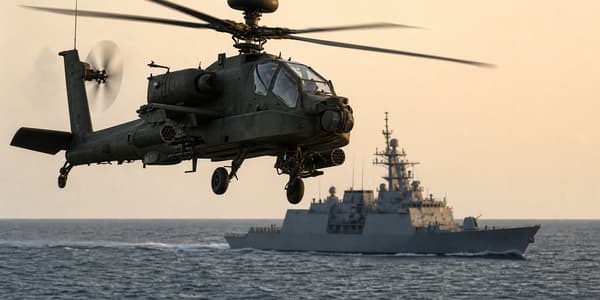
The helicopter went down Monday evening near the coast of Oman. Trump said Iran shot it down while the aircraft was on routine patrol, and CENTCOM determined that an Iranian drone struck the aircraft, according to reporting from NBC News, CNN, and NPR. Iran denied intentionality. Foreign Minister Abbas Araghchi said the helicopter could have been brought down by "an accident" or by being "caught in crossfire," and Tehran did not officially claim responsibility. CENTCOM's conclusion, confirmed across multiple outlets, held otherwise.
Trump had publicly vowed retaliation before the strikes were launched, posting on social media that Iran had shot down a U.S. Army helicopter and would pay a price, according to Al Jazeera and ABC News. The strikes that followed were targeted, swift, and framed by the administration as self-defense rather than escalation, a framing that stands in deliberate contrast to the more cautious posture of previous years toward Iranian provocations.
Hours after the U.S. strikes, Iran's Islamic Revolutionary Guard Corps said it had launched missiles and drones toward American targets in the region, according to a post on its official Telegram channel cited by CNBC and The Hill. Foreign Minister Araghchi warned that "our powerful armed forces will leave no attack or threat unanswered." Explosions were reported near Qeshm Island and Bandar Abbas, and air raid sirens sounded in Bahrain as Iranian projectiles headed toward Gulf allies, according to ABC News.
That ceasefire was already showing cracks before the Apache went down. Iranian drones had struck a passenger terminal at Kuwait's main airport earlier in the week, killing one person and wounding dozens, according to NPR. U.S. forces had downed Iranian drones near the Strait as recently as June 6. And a potential deal to extend the ceasefire by 60 days had stalled: U.S. and Iranian negotiators tentatively agreed to an extension, but Trump called for unspecified changes and Iranian officials had not signed off, ABC News reported. Despite that backdrop, Trump told reporters Friday that "the situation with Iran seems to be going quite well."
The Bigger Picture
The political dimension is hard to miss. Iran spent years testing American resolve by striking U.S. assets through proxies and, increasingly, directly. The Biden administration repeatedly absorbed those attacks and responded with limited or delayed force. Trump has moved differently from the start. Tuesday's strikes were launched within hours of the helicopter going down and hit Iranian territory directly, not a proxy target elsewhere in the region. Supporters of a harder line on Tehran argue that consistent, immediate consequences are the only policy that changes Iranian decision-making.
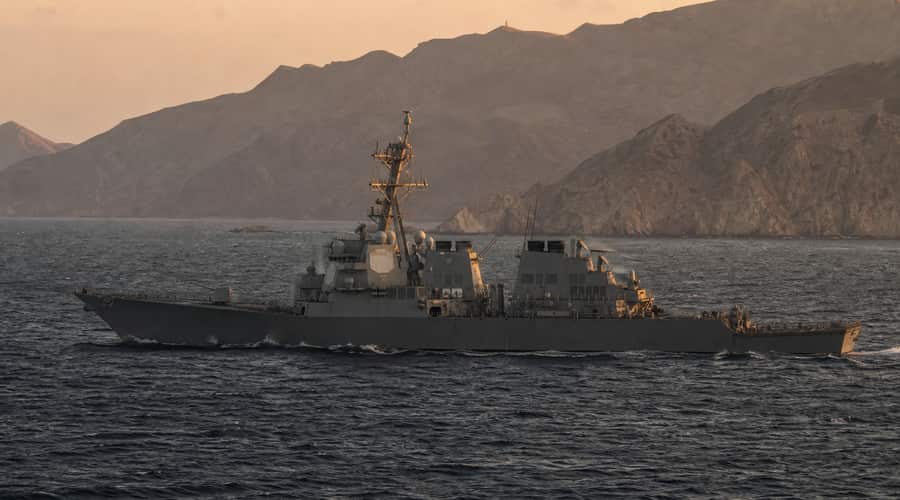
The targets selected underscore the strategic calculation. Radar stations that give Iran situational awareness over the Strait of Hormuz, through which roughly one-fifth of the world's oil supply passes daily, were among the sites destroyed, according to CENTCOM and reporting by Air and Space Forces Magazine. Degrading that network limits Iran's ability to track and threaten commercial and military shipping in a waterway the global economy cannot afford to lose.
What comes next will determine whether Tuesday's exchange was a contained incident or the moment the ceasefire formally unraveled. Iran has vowed retaliation and demonstrated the will to follow through. The U.S. maintains significant naval and air assets in the region. Congress has not been formally notified under the War Powers Act, and questions about escalation authority and authorization will follow quickly on Capitol Hill. Whether diplomacy can reassert itself or whether both sides have now crossed a threshold that neither can walk back from is the question every policymaker in Washington is asking this morning.
Also read: Trump vows US response after Iran downs Apache near the Strait of Hormuz • Pentagon flags Alibaba, BYD and Baidu as Chinese military companies • Federal watchdog finds 101 UNRWA staff were Hamas fighters on October 7