President Trump has approved a 30-year civil nuclear cooperation agreement with Saudi Arabia, opening the kingdom to American reactor builders without demanding Riyadh recognize Israel in return.
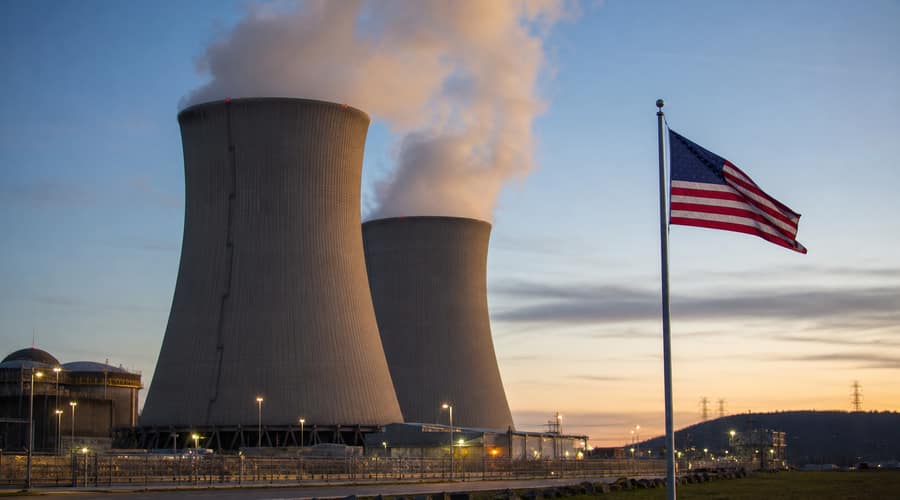
The agreement, confirmed by CNN, NBC News, Forbes and Fortune, allows U.S. firms to construct civilian nuclear reactors inside Saudi Arabia. Westinghouse, the Pittsburgh-based reactor manufacturer, has been named the lead beneficiary of a package early reporting has pegged at tens of billions of dollars. The pact now moves to Congress, which by federal law reviews any nuclear cooperation agreement before it can take effect.
Where past administrations tied Saudi nuclear cooperation to Riyadh recognizing Israel, Trump delinked the two entirely. That single move accomplishes what years of Abraham Accords diplomacy could not: a concrete American energy foothold in the Gulf's largest economy, delivered without Saudi Arabia having to give Jerusalem anything in return. The Biden administration spent years trying to bundle Saudi nuclear help with Israeli normalization and came away with neither. Trump got the nuclear deal by itself.
The enrichment question is murkier than the headline suggests. The agreement sets up a joint U.S.-Saudi feasibility study on building an enrichment facility, not a green light to build one tomorrow. If it moves forward, American firms would construct and run it, and enrichment technology itself would not transfer to Saudi hands. Riyadh is separately barred for a decade from developing or buying its own enrichment capability. Yet Energy Secretary Chris Wright told reporters flatly that uranium enrichment "is not part of the deal," a claim that sits awkwardly next to the feasibility study language other officials have described. That gap in the administration's own messaging is worth watching as details firm up.
There is also no requirement that Saudi Arabia sign the IAEA Additional Protocol, the tougher inspection regime the United Arab Emirates accepted in its own 2009 nuclear pact with Washington, according to CNN and NBC News. Oversight instead runs through a bilateral U.S.-Saudi arrangement rather than the International Atomic Energy Agency's standard inspection regime. Supporters call that a pragmatic way to get American companies into a market China and Russia have been courting for years. Critics call it a safeguards downgrade.
The timing is not incidental. The United States and Iran are trading strikes. CNN reported overnight exchanges this week, and Trump has warned Tehran he will hit an Iranian bridge or power plant every time Iranian forces target ships in the Strait of Hormuz. He told Fox News he would knock out all of Iran's bridges if Tehran will not negotiate. Locking Saudi Arabia into a U.S.-anchored nuclear framework, rather than watching Riyadh shop for reactors from Beijing or Moscow, gives Washington leverage in the Gulf at the exact moment it is applying military pressure on Iran. A Saudi kingdom tied to American engineers, American parts and American oversight is a Saudi kingdom that stays in Washington's orbit rather than Tehran's or Beijing's.
Democrats and Non-Proliferation Critics Push Back
Senate Democrats moved fast to attack the deal. Sen. Ed Markey of Massachusetts said Trump "is giving nuclear-weapon-wannabe Saudi Arabia nuclear technology without the strongest safeguards, which is the same technology that the Trump administration went to war with Iran over." Markey and Sen. Jeff Merkley have reintroduced legislation that would restrict Saudi access to nuclear weapons-relevant technology. A dozen Senate Democrats wrote Secretary of State Marco Rubio in May demanding Saudi Arabia accept the IAEA's toughest inspection standard as a condition of any deal.
The administration's answer is straightforward: reactors, not weapons, and no enrichment technology handed over regardless of what the feasibility study eventually recommends. Whether that holds up depends on what Congress does with the agreement once it lands on Capitol Hill, and on whether the study Wright says isn't happening produces a facility anyway. For now, American firms have a foothold in the Gulf's biggest energy market that Beijing and Moscow don't, and Saudi Arabia has a nuclear future tied to Washington instead of Tehran. Congress's review period is where the real fight over safeguards plays out next.
Also read: Trump hits Canada with new 50 percent tariffs over trade discrimination • Giant Eagle cuts prices on 300 items after Trump's cost of living push • Trump alleges China stole 220 million voter files as networks skip speech