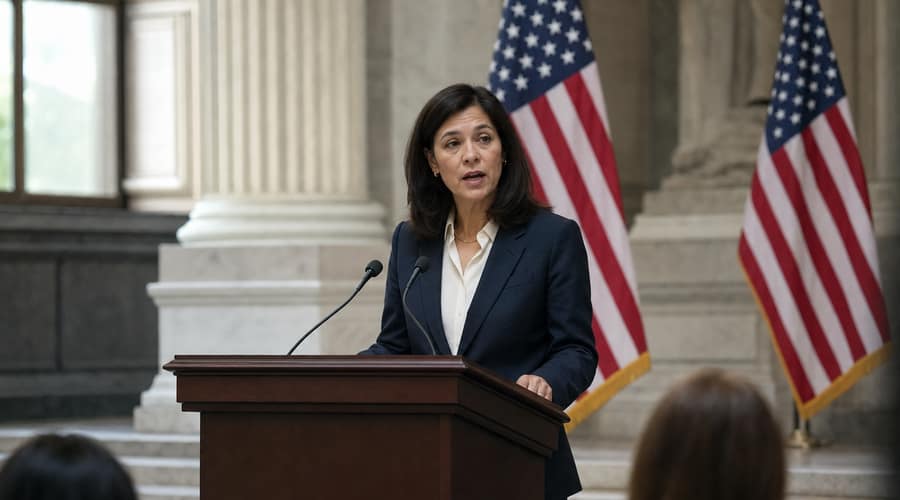
HHS Secretary RFK Jr. and CMS Administrator Dr. Oz disclosed this week that over 1 million people are enrolled in the ACA marketplace without a valid Social Security number, part of what they say is a fraud crisis enabled by Biden-era policy failures costing taxpayers tens of billions of dollars.
The Obamacare marketplace is, in the words of Health and Human Services Secretary Robert F. Kennedy Jr., "plagued by fraud." On June 27 and 28, Kennedy and Centers for Medicare and Medicaid Services Administrator Dr. Mehmet Oz went public with a number that captures the scale of it: more than 1 million people currently enrolled in HealthCare.gov hold no valid Social Security number on file. Every one of those enrollments was broker-assisted. Every one pays zero in premiums, meaning the full cost falls on federal subsidies.
Kennedy placed the blame directly on the previous administration. The Biden White House, he said, "dismantled basic program integrity guardrails" that had kept the exchanges reasonably clean. What followed was an open season for bad actors.
Dr. Oz described the mechanics in plain terms: rogue insurance agents filing applications for people who never asked to be enrolled, using stolen identities to complete the paperwork, and collecting commissions on policies that should never have existed. Enrollees often had no idea they were covered by a plan they never requested. Real Americans discovered their identities had been used when they tried to buy their own insurance and found a policy already in their name. The agents pocketed the commissions and moved on.
The numbers behind it are staggering. The Paragon Health Institute, a conservative health policy research group, estimates that 6.2 million of all 2026 open-enrollment sign-ups were improper, roughly 27 percent of total exchange enrollment for the year. The subsidy exposure from those enrollments runs as high as $25 billion in 2026 alone, nearly one quarter of all projected federal exchange subsidy spending, according to Paragon's analysis of CMS enrollment data and Census Bureau population figures.
One pattern jumps out of the data. Fifty-six percent of 2026 HealthCare.gov sign-ups reported incomes between 100 and 150 percent of the federal poverty level, precisely the income band that qualifies for the largest available subsidies. That clustering is not coincidental. It is the signature of agents gaming the system by plugging in whatever income figure maximizes the payout. Paragon also found that 35 percent of exchange enrollees in 2024 generated no medical claims at all, double the rate you would expect in a functioning insurance market, which points to millions of phantom enrollees who are either covered elsewhere, unaware of their enrollment, or entirely fictitious.
Kennedy separately raised a harder question about the Social Security gap: if an enrollee has no SSN on file, how was their eligibility verified? The ACA bars undocumented immigrants from marketplace coverage, but the identity-theft schemes Oz described mean the person named on a fraudulent application may not be the person whose documents were used. "We don't know who some of these people are," Kennedy said, according to the New York Post.
What the Trump administration is doing about it
The Trump administration did not wait for this week's announcement to start cutting. CMS has already removed nearly 3 million fraudulent or improper enrollees from the exchange rolls, with another 2.6 million flagged for further review, according to reporting by Just the News. In May, HHS moved to require agents to submit verified client information before receiving any commission payment, closing the door on the most direct incentive for fraudulent sign-ups. Kennedy said his department is working with insurers to cancel policies that should not have been issued and to recover improperly paid subsidies.
The political question is why the Biden administration let this run so long. Paragon's researchers have been documenting the enrollment anomalies for two years, and the patterns were visible in publicly available CMS data. The income clustering, the zero-claims rate, the geographic concentration of suspicious enrollments in HealthCare.gov states: none of it was hidden. The prior administration loosened verification requirements starting in 2021 in the name of expanding access, and the fraud followed the loosened rules wherever they went.
Congress is now watching. The Big Beautiful Bill, currently moving through the Senate, includes ACA integrity provisions that would tighten subsidy verification requirements permanently. Whether those provisions survive the reconciliation process will determine whether the cleanup now underway at HHS is durable or just a two-year correction that reverts the next time a more permissive administration takes office.
Also read: DOJ sues four states that refused to hand over SNAP fraud data • Trump cuts $67 million in teen pregnancy grants from Planned Parenthood over explicit content • Obama-appointed judge permanently bars Trump's voter citizenship order