The Justice Department is asking the Supreme Court to lift a lower court block on Trump's order requiring proof of citizenship before mail ballots go out, with the midterms 99 days away.
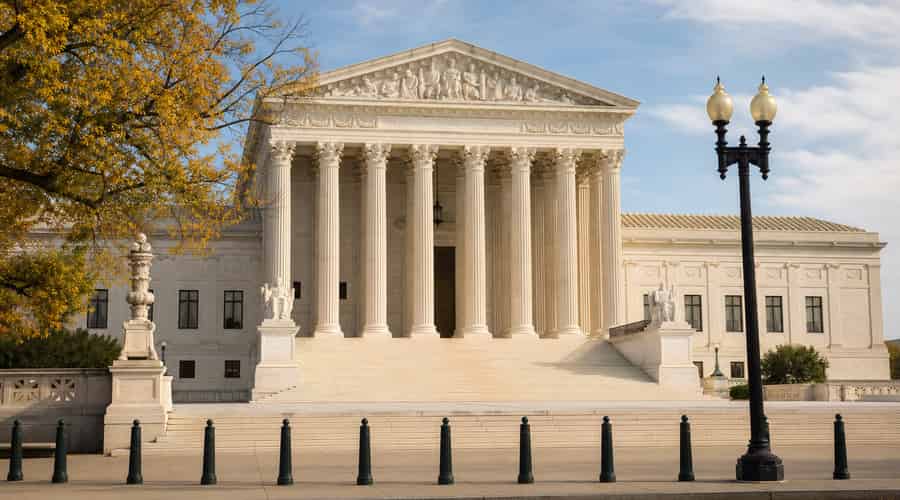
The Trump administration filed an emergency application with the Supreme Court on Monday, asking the justices to let President Trump's mail-in voting order take effect nationwide after a federal appeals court kept it frozen in 23 Democratic-led states. The stakes are immediate: the Court has already ordered those states to respond by August 3, a deadline that puts the justices on a collision course with a midterm election calendar that leaves little room for delay.
Trump signed the order in March. It directs the U.S. Citizenship and Immigration Services and the Social Security Administration to build a federal list of verified citizens eligible to vote, and it tells the U.S. Postal Service to deliver mail ballots only to voters who appear on that list. The administration says the goal is straightforward: keep noncitizens off the voter rolls and out of the mail ballot pipeline. "General policy guidance," the DOJ called it in its filing, arguing the order does not dictate how states run their elections, only how a federal agency handles the mail.
Twenty-three states and the District of Columbia sued within weeks of the order's signing. Their case landed before U.S. District Judge Indira Talwani, an Obama appointee, who blocked enforcement and wrote plainly that "the Constitution does not grant the President any specific powers over elections." The 1st U.S. Circuit Court of Appeals upheld that block on Saturday, ruling the administration could not move forward with the citizenship-list requirement in those states while the case proceeds. The states argue the Constitution hands election administration to states and Congress, not the White House, and that scrambling ballot delivery rules 99 days before voters go to the polls invites exactly the kind of confusion election officials spend years trying to avoid.
That timing argument is the crux of the pushback, and it is not a frivolous one. Election officials in both parties tend to treat the months before a federal election as a period where the rules should already be locked in. But the administration's counter is just as direct: if noncitizens can receive and cast mail ballots because no verification system exists, the integrity problem does not wait for a more convenient court calendar either.
Part of a bigger fight over noncitizen voting
This case does not exist in isolation. It lands alongside the ongoing push in Congress for the SAVE Act, the House-passed bill that would require documentary proof of citizenship to register to vote nationwide, a measure that has stalled in the Senate amid Democratic opposition and recess scheduling fights. Conservatives in both chambers have made noncitizen voting verification a top legislative priority heading into the midterms, even though existing federal law already bars noncitizens from voting in federal elections and instances of it are rare. The administration's argument is that rarity is not the same as impossibility, and that a verified citizenship list closes a gap that state-level checks have not consistently closed themselves.
Mail voting itself has become one of the sharpest partisan fault lines in American elections since 2020, when its use expanded dramatically during the pandemic and never fully receded in many states. Republicans have pushed for tighter chain-of-custody rules, signature verification and now, in this case, citizenship confirmation before a ballot ever reaches a mailbox. Democratic state officials counter that the order effectively lets a federal agency override state voter rolls that states themselves are constitutionally responsible for maintaining, and that doing so through an executive order rather than legislation sidesteps Congress entirely.
The Supreme Court has not indicated how it will rule, and the justices could act on the emergency application well before argument on the underlying case is ever scheduled. With the states' response due August 3, a decision could come within weeks, either clearing the way for Trump's order to take effect this election cycle or leaving it frozen through November. Either outcome will shape how ballots move through the mail in the most contested states of the 2026 midterms, and it will not be the last mail voting fight to reach the Court before Election Day.
Also read: Sherrill Stonewalls DOJ Data Demand After Attacking Trump on Voter Rolls • DSA co-chair says true to abolishing the Senate, ICE and borders • California AG sued after rewriting voter ID measure's ballot title