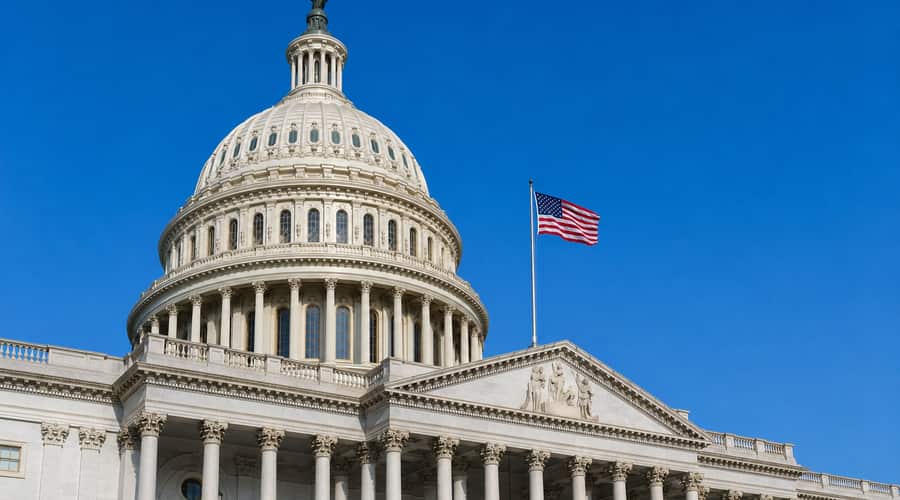
House Republicans cleared a procedural hurdle Tuesday on a $70 billion immigration enforcement package, setting up a final floor vote that would deliver the largest dedicated ICE and CBP funding in American history.
The House voted 213 to 211 to advance the rule governing debate on the reconciliation bill, a near-party-line outcome that keeps President Trump on track to sign into law a funding stream for Immigration and Customs Enforcement and Customs and Border Protection through the end of his term. Two conservatives who initially blocked the measure, Reps. Chip Roy of Texas and Tim Burchett of Tennessee, reversed course after leadership committed to including statutory language that would codify key Trump border enforcement policies, according to The Hill.
The flip mattered. House Speaker Mike Johnson can afford virtually no defections with Republicans holding a razor-thin majority, and the holdouts had threatened to sink the rule entirely. Roy, the House Freedom Caucus policy chair, has made his bottom line clear in recent weeks: any deal must write Trump's border enforcement into statute, not just fund the agencies. He introduced the Permanent Trump Secure Border Act before the vote, legislation designed to lock in the administration's asylum restrictions and border security directives so no future Congress could unwind them with a simple majority, according to the Daily Caller. Leadership's commitment to those codification provisions was the price of his vote.
The Senate passed its version of the package 52 to 47 on June 5, with Sen. Lisa Murkowski of Alaska the lone Republican in opposition, NPR reported. That set up the House action this week. The bill funds ICE and the Border Patrol for roughly three years through the budget reconciliation process, a tool that enables passage with a simple majority and requires no Democratic votes.
ICE and CBP were cut from an earlier government spending agreement after Democrats objected to their inclusion. Republicans responded by pursuing a standalone reconciliation vehicle, arguing the agencies cannot operate at the scale the current border mission demands without dedicated, multi-year funding. At $70 billion, the package would represent the largest single appropriation ever directed specifically at interior immigration enforcement and border security operations, an investment Republicans say is overdue after years of underfunding the agencies tasked with carrying out federal immigration law.
Democrats have not been quiet in opposition. House Minority members filed more than 150 amendments, calling the package a "slush fund" with inadequate oversight. Republicans countered by pointing to the agencies' documented operational needs and to Customs and Border Protection data showing illegal crossings at multi-year lows, crediting tougher enforcement already underway as proof that funding enforcement produces results.
The bill's path was not entirely smooth on the Republican side either. An earlier Senate draft included roughly $1 billion tied to White House security upgrades, among them a ballroom construction project, and a nearly $1.8 billion Justice Department fund that critics inside the party labeled a political payback mechanism. Both provisions generated intra-party resistance. The ballroom language was stripped before the Senate voted, but the friction cost Republicans weeks and blew past the June 1 deadline President Trump had set for the bill's delivery, according to CNBC and the Washington Post.
What Comes Next
With the rule adopted, the full House is now set to debate and vote on the bill itself. Final passage would send the legislation to a conference process to reconcile differences between the House and Senate texts, or the House could vote to adopt the Senate version outright and send it directly to the president. Republican leaders have not announced which route they intend to take, but both chambers have now signaled the votes are there to get it done.
The administration has framed the funding as essential to sustaining the enforcement surge it credits for the documented drop in border crossings. Codifying that posture in statute, rather than relying on executive budget reprogramming, would give it durability that a future White House could not easily undo with a pen. That is precisely the argument Roy has been making, and for now, leadership has agreed.
The remaining uncertainty centers on whether the codification language Roy extracted before flipping survives the final legislative steps intact. His vote and those of other Freedom Caucus members are conditioned, at least in part, on that commitment holding. Watch what ends up in the enrolled bill that goes to the president's desk, because that text will determine whether this landmark appropriation comes paired with the permanent enforcement framework conservatives have been demanding since Trump took office.
Also read: GOP senators back DHS threat to pull customs officers from sanctuary airports • Federal Judge Tosses Trump's $100K H-1B Visa Fee as Unconstitutional Tax • DOJ Targets 17 Naturalized Citizens in Largest Denaturalization Push Ever