The Department of Homeland Security has approved a plan to check voter rolls against a federal immigration database and tighten controls on mail-in ballots, with the system set to go live by June 30.
The Department of Homeland Security signed off on a sweeping election-integrity initiative this week that would allow states to submit their full voter registration rolls to a federal immigration database and place new restrictions on how mail-in ballots are handled, according to court filings dated June 5. The administration expects the system to be fully operational by June 30, with nearly half of all states already signed on or in the process of doing so.
The plan flows from President Trump's March 31 executive order, "Ensuring Citizenship Verification and Integrity in Federal Elections," which directed DHS to build a "State Citizenship List" drawn from federal naturalization records, Social Security Administration data, and the SAVE program. SAVE, or Systematic Alien Verification for Entitlements, is a federal database administered by U.S. Citizenship and Immigration Services that government agencies have long used to check immigration status and citizenship. Under the new framework, states can run their entire voter registration rolls through the system rather than submitting individual names, a significant expansion of how the database has previously operated.
Twenty-six states have signed or are in the process of signing memorandums of agreement to use the expanded SAVE program for voter list maintenance, according to the Campaign Legal Center. Texas and Louisiana have already submitted their full voter rolls and found small numbers of potential noncitizens on the lists, Fox News reported.
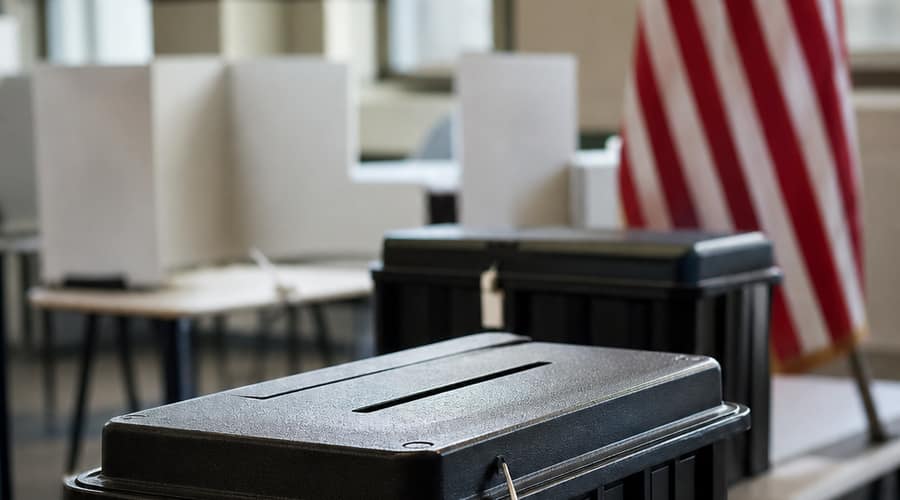
The plan goes further than citizenship checks alone. DHS will coordinate with the U.S. Postal Service to monitor mail-in ballot flows, flag unusual patterns, and generate investigative leads for potential fraud, court filings show. Every outgoing mail-in ballot envelope will be required to carry an "Official Election Mail" marking and a unique tracking barcode. USPS would also be barred from delivering mail-in ballots to anyone not listed on a state-certified participation list, a measure the administration says will ensure only eligible voters receive ballots.
The initiative advances on two tracks in Congress as well. The SAVE Act, standalone legislation that would have required documentary proof of citizenship at the point of voter registration, failed in the Senate on June 4 in a 48-to-50 vote. Four Republicans joined every Democrat to block it: Susan Collins of Maine, Lisa Murkowski of Alaska, Mitch McConnell of Kentucky, and Thom Tillis of North Carolina, according to Fox News. Separately, Senators Marsha Blackburn and Lindsey Graham introduced the Election Security Partnership Act on June 2, which would offer states financial incentives to cross-check voter rolls against the SAVE database on a quarterly basis, the Washington Times reported.
Legal Challenges Mount
Opponents moved quickly to court. Common Cause, the NAACP, and Black Voters Matter filed suit on April 3 in the U.S. District Court for the District of Columbia, asking a judge to declare the executive order unconstitutional and block the program, court records show. The ACLU, the League of Women Voters, and the Campaign Legal Center filed separate challenges arguing the plan violates the National Voter Registration Act and the Privacy Act of 1974.
Voting rights groups also contest the accuracy of the SAVE database. A North Carolina audit found that 97.6 percent of voters the system flagged as possible noncitizens were in fact citizens, often newly naturalized individuals whose federal records had not yet been updated in government systems, according to Democracy Docket. DHS and the White House did not respond to requests for comment by publication time.
With the June 30 launch date set and multiple federal cases moving through the courts simultaneously, the program faces its first real test well before Election Day. Republicans in Congress are already pushing to turn the executive framework into permanent federal law, and the fight over who can verify, and who can block, the citizenship of American voters is certain to define the political calendar heading into the fall.