The House has voted to block every dollar of American assistance to Nigeria until its government proves it is protecting Christians from slaughter, not just talking about it.
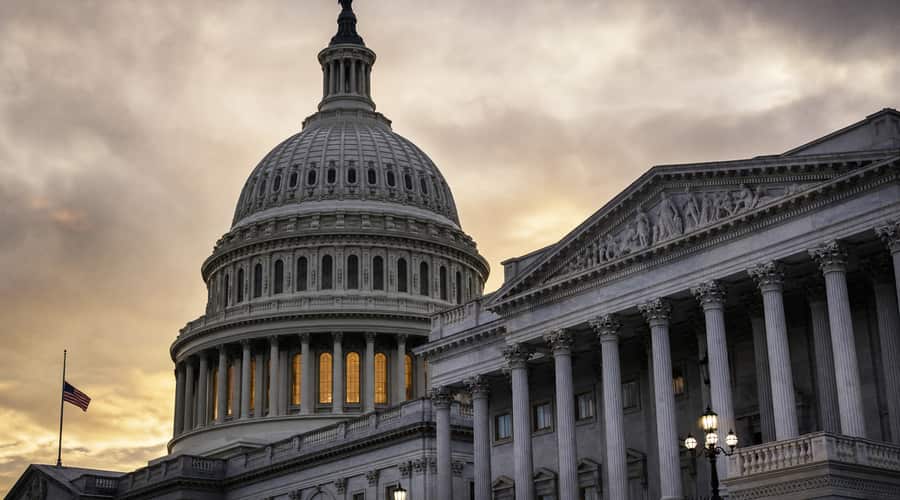
Rep. Greg Steube, a Florida Republican, offered a floor amendment this week that did something Washington rarely does: it tied money directly to a body count. His amendment, attached to the fiscal year 2027 State Department funding bill, withholds 100 percent of U.S. assistance to Nigeria until the government there takes verifiable steps to stop and prosecute anti-Christian violence. The full $47.3 billion National Security and State appropriations bill passed the House 217 to 209 on Wednesday. Steube's amendment itself cleared on a voice vote.
"Nigeria's government failed to protect Christians and other religious minorities from years of violence and terrorism carried out with impunity," Steube told the Daily Signal. "American taxpayers should never bankroll a government that looks away while Christians are abducted, tortured, and killed."
The underlying bill, as written before Steube's amendment, would have withheld only 50 percent of Nigeria's aid pending certification from Secretary of State Marco Rubio that the country was taking "effective steps to prevent and respond to violence and hold perpetrators accountable." Steube said that was not good enough. "Withholding only half of U.S. assistance still rewards that failure, so I pushed to increase it to 100 percent," he said, according to the Daily Signal.
The certification language survives untouched. Nigeria does not lose the money forever. It loses it until Rubio's State Department can certify, in writing, that Abuja is actually doing something about the killings. That is the whole mechanism: no certification, no check.
The scale of what's driving this is not abstract. United Nations reporting cited in coverage of the vote puts the number of Christians in Nigeria killed, kidnapped, or displaced by Islamist militants at more than 3.5 million. Boko Haram and its offshoot, ISIS-West Africa Province, along with armed Fulani herdsmen in the country's Middle Belt, have spent years burning churches, razing villages, and holding pastors and schoolgirls for ransom. Nigerian outlets including Punch and Vanguard reported the vote extensively, describing it as a direct rebuke of Abuja's security record rather than a routine appropriations fight.
A party-line fight, with exceptions
The broader spending bill split almost entirely on party lines, 217 Republicans to 209 Democrats, the kind of margin that reflects a fight over the whole $47.3 billion package rather than Nigeria specifically. Steube's amendment, by contrast, moved by voice vote, meaning no formal roll call recorded individual member positions on the Nigeria provision itself. That is worth noting for readers who want to know exactly who stood where: the public record shows the amendment passed without objection strong enough to force a count, even as the underlying bill it rode on drew a near party-line brawl.
Nigerian President Bola Tinubu's government has not issued a public response to the amendment as of this writing, and PRN was unable to locate an on-the-record statement from Abuja or the Nigerian foreign ministry addressing the vote directly. The bill's authors did not report seeking Nigerian government comment before the floor vote, which is typical for an appropriations rider of this kind.
Steube has been blunt that this is not a broader anti-aid crusade. It is a Nigeria problem, tied to a Nigeria failure. The distinction matters, because critics of foreign-aid conditioning often argue that cutting assistance punishes ordinary people rather than the officials responsible. Steube's answer, in effect, is that the money can flow again the moment Abuja shows it is serious. Nothing in the amendment closes that door permanently.
The bill now moves to the Senate, where its fate is far less certain. The chamber has shown less appetite than the House for aid conditions this sweeping, and a $47.3 billion national security bill carries plenty of other provisions that could snag votes for reasons having nothing to do with Nigeria. If the Senate strips or softens the Nigeria language, it will land back in a conference fight where Steube and his allies will have to defend the 100 percent figure all over again. If it survives intact and reaches the president's desk, it becomes one of the most direct uses of the appropriations power against a foreign government over religious persecution in recent memory. Either way, the next move belongs to the Senate, and to whatever Abuja finally decides to say.
Also read: Schmitt demands feds revoke citizenship papers wrongly given to diplomats' kids • DHS says 256,000 noncitizens may be on voter rolls in four states • Trump administration revives green card rule denying immigrants who rely on welfare