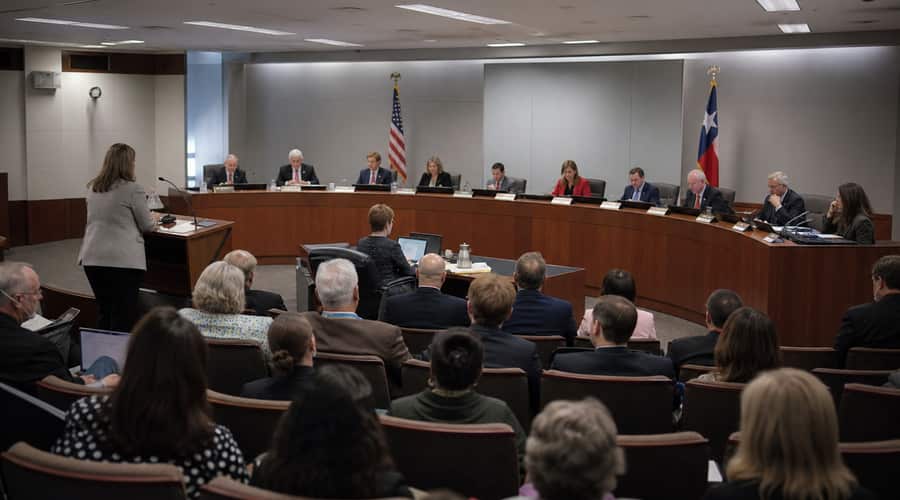
The Texas State Board of Education voted 9-5-1 Friday to add Bible passages to a mandatory K-12 reading list, making the state the first in the nation to require religious texts as assigned reading in public schools.
Texas just made history, and the fight over it is only starting.
The Republican-controlled State Board of Education voted 9 to 5, with one abstention, on Friday to approve a roughly 200-text required reading list that places Bible passages alongside Charles Dickens and other literary classics. The list covers every grade from kindergarten through twelfth, takes effect in the 2030-2031 school year, and reaches more than 5 million students enrolled in Texas public schools. Antero Garcia, president of the National Council of Teachers of English and a Stanford University professor, told ABC News he does not know of any other state with a mandatory reading list that includes religious texts. Texas is the first.
The list is not a Sunday school syllabus dropped into a public school binder. Elementary students will read picture-book versions of David and Goliath and Daniel in the Lion's Den. Fifth graders encounter excerpts from the Book of Exodus. By seventh grade, the Shepherd's Psalm is required reading. Middle schoolers work through the Sermon on the Mount from the New Testament. High schoolers study the Adam and Eve narrative and the parable of the prodigal son. Dickens' Great Expectations sits in the same list. The board's intent is clear: the Bible belongs in the canon of what educated Texans read, not as theology but as literature and cultural foundation.
The opposition was not entirely on one side of the aisle. Evelyn Brooks, the only Republican board member to vote no, told CNN she believes the measure is unconstitutional. State Representative Salman Bhojani, a Democrat from Euless, argued the board's final list went further than what the Texas Legislature actually authorized under House Bill 1605, the underlying statute that enabled the reading list process. His objection raises a procedural question courts may take seriously: whether the board acted within the scope of what lawmakers granted it.
A legal challenge is not a question of if but when. The ACLU, the ACLU of Texas, Americans United for Separation of Church and State, and the Freedom From Religion Foundation have all indicated opposition rooted in the First Amendment's Establishment Clause. Lawsuits will almost certainly arrive before 2030. The board passed the measure knowing that.
The Broader Stakes for Education Policy
Supporters of the measure have argued for months that the Bible is among the most consequential texts in Western civilization and that excluding it from a mandatory reading list is its own ideological act. The stories selected , David facing Goliath, Daniel in the lion's den, the prodigal son's return , run through American literature, law, and moral tradition in ways a student who has never read them will simply miss. Reading them is basic literacy, not a church service.
Texas under Governor Greg Abbott has positioned itself as the leading state laboratory for education reform that reflects what many conservative parents have demanded: curriculum grounded in American heritage rather than stripped of it. This vote follows years of curriculum battles in Austin and fits the larger pattern of red-state legislatures pushing back against the secularization of public schools.
Whether other states follow depends heavily on how the courts rule. A federal injunction would push the question up the appellate chain toward the Supreme Court, which has shown in recent terms a willingness to revisit long-standing interpretations of the Establishment Clause. A ruling that upholds the Texas list would open the door in legislatures from Florida to Tennessee. The 2030 implementation date gives Texas time to build curriculum and, almost certainly, to fight every lawsuit that files in the meantime. For the board's nine-vote majority, that is not a problem. It is the plan.
Also read: Federal appeals court bars California from hiding student gender transitions from parents • UC Regents Open SAT Review After 1,400 Professors Cite Math Crisis • Garland Issued School Board Memo After DOJ Lawyers Said No Federal Law Applied