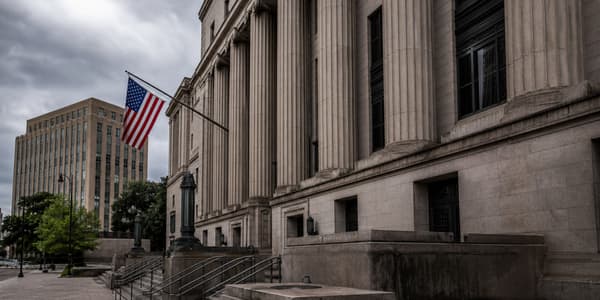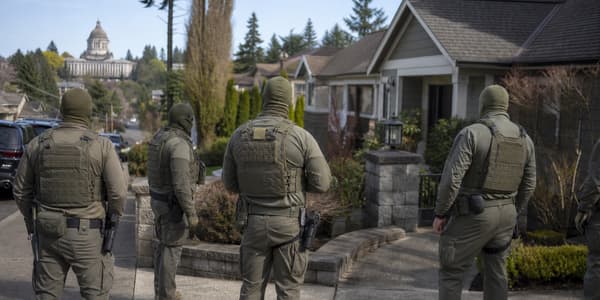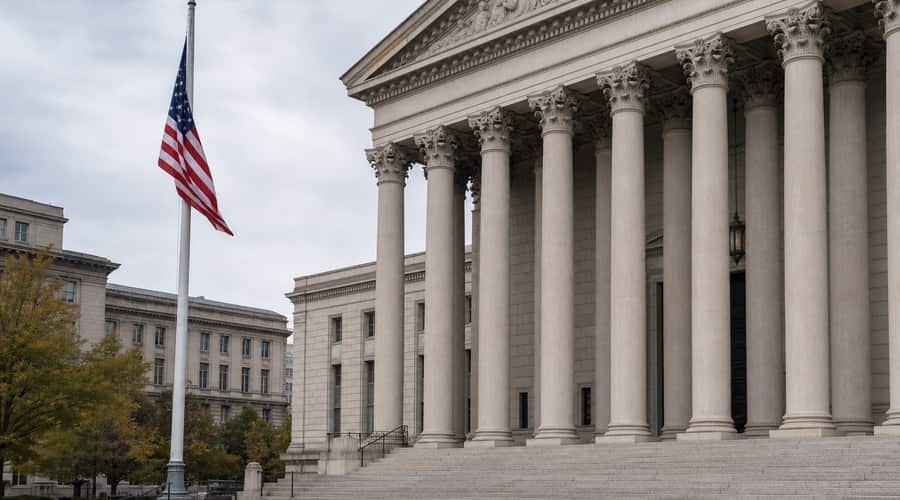
Chief U.S. District Judge Patrick Schiltz quashed all federal subpoenas against Gov. Tim Walz and other Minnesota Democrats on June 22, then faced immediate questions about his long history of donating to pro-immigrant legal organizations directly aligned with the fight he just decided.
The ruling landed Monday. All six subpoenas, issued January 20 to Walz, Minneapolis Mayor Jacob Frey, St. Paul Mayor Kaohly Her, Attorney General Keith Ellison, the Hennepin County Attorney's Office, and the Hennepin County Board of Commissioners, gone. Chief U.S. District Judge Patrick Schiltz declared in a 29-page opinion that their "dominant purpose" was to "coerce Minnesota officials into assisting the federal government with enforcing civil immigration law and to harass and retaliate against them for failing to do so." He called the DOJ's use of the grand jury subpoena process "blatantly unlawful and unethical."
The ruling drew immediate conservative fire, and not only for its sweeping language. Fox News and the Daily Signal both reported that Schiltz, a George W. Bush appointee, has donated for years to the Immigrant Law Center of Minnesota and Mid-Minnesota Legal Aid. The Immigrant Law Center was listed in Schiltz's own financial disclosures as a recipient going back to at least 2019. The group's work is not merely courtroom representation. It openly advocates against federal immigration enforcement, publicly characterizing Trump administration enforcement actions as "cruel and inhumane." The judge acknowledged the donations plainly, telling Fox News he has "donated for many years" to both organizations because he believes low-income people should have access to legal representation.
The legal standard for recusal is whether a reasonable person, knowing all the relevant facts, would question the judge's impartiality. Schiltz apparently concluded that standard was not met, because he stayed on the case and issued a ruling that dismantled the entire federal investigation in one stroke. Critics are not convinced. The Immigrant Law Center of Minnesota is not a neutral legal-services provider. It is an advocacy organization that has taken public positions against the specific enforcement policies at the center of the Walz probe. A judge who cuts annual checks to a group fighting those policies presiding over a case about those policies is not, by any reasonable read, above reproach.
Federal ethics rules under 28 U.S.C. Section 455 require disqualification when a judge's impartiality "might reasonably be questioned." Schiltz's defenders will note that charitable giving to legal aid does not automatically disqualify a judge from hearing immigration-related cases. That is technically true. It is also beside the point. The question is not whether legal aid donations are permitted in general. It is whether this judge's sustained financial support for an organization that openly opposes the enforcement posture being investigated in this specific case should have triggered disclosure and recusal. Schiltz did neither.
What Comes Next for the DOJ
The Justice Department has not confirmed a formal appeal as of Monday evening, but the ruling is almost certainly headed to the Eighth Circuit. That court, which covers Minnesota, has generally proven more receptive to the Trump administration's immigration enforcement arguments than district courts across the country. The administration's legal position on sanctuary jurisdiction subpoenas has not been fully tested at the appellate level, and Schiltz's opinion, however sharply written, rests on a finding about prosecutorial motive that an appellate panel could scrutinize closely.
What Schiltz leaned on heavily was Trump's own public statements: a social media post previewing a "DAY OF RECKONING AND RETRIBUTION" for Minnesota, followed three days later by the leak of the purported federal investigation targeting Walz and Frey. He used that sequence to argue the subpoenas fit a pattern of politically motivated criminal process. That argument might persuade three Eighth Circuit judges. It might not. Appellate review of grand jury subpoenas is not deferential, and the DOJ will argue that a judge's inference about motive is insufficient to nullify a legitimate investigative tool.
Schiltz himself wrote that "connections between the information sought in the subpoenas and any possible criminal violation range from extremely weak to nonexistent." That line will be the center of gravity on appeal. If the Eighth Circuit agrees, the ruling holds. If judges there read the evidentiary record differently and find some cognizable investigative purpose, the subpoenas could be reinstated and the probe revived. Either way, the recusal question is not going away. The DOJ's next filing is worth watching. So is any motion challenging Schiltz's failure to step aside before he handed his allies in the Minnesota Democratic establishment a complete legal victory.
Also read: Senate votes 85-5 to boot Wall Street from the single-family housing market • Biden judge halts Trump citizenship database ahead of 2026 midterms • Hochul quietly extends sex worker healthcare program, sticking taxpayers with $2.5M tab