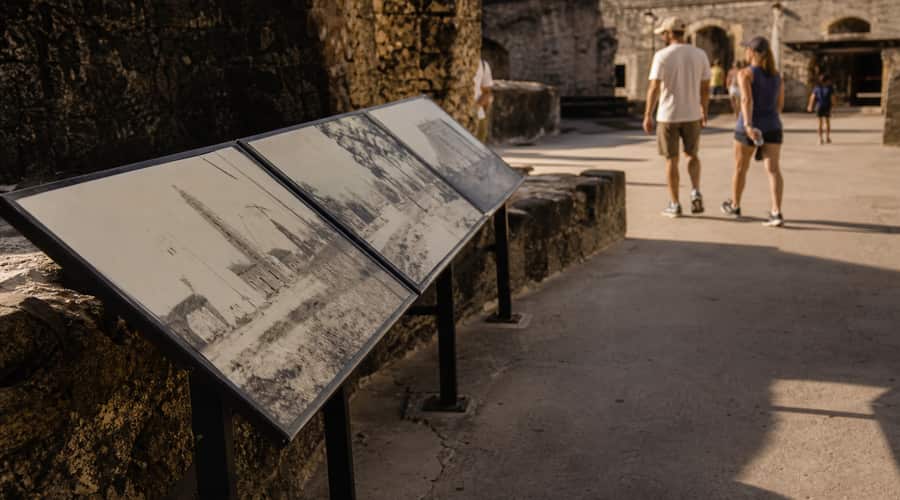
A federal judge in Boston ordered the Trump administration Friday to reinstall dozens of exhibits on slavery, climate change, and civil rights at national parks nationwide, giving the Interior Department 21 days to comply.
U.S. District Judge Angel Kelley, a Biden appointee, issued the preliminary injunction at the request of six conservation and historical preservation groups, ruling that the Interior Department violated federal law when it removed the signs and panels beginning in 2025. The deadline Kelley set lands on July 4, America's 250th anniversary, a timing she said was necessary "to properly honor the remarkable achievements of the United States."
The removals trace to an executive order Trump signed on March 27, 2025, titled "Restoring Truth and Sanity to American History." The order directed Interior to strip content it characterized as "partisan ideology" and material that "disparages" Americans from federally managed sites. In the months that followed, National Park Service staff pulled explanatory panels from Independence National Historical Park in Philadelphia, the outdoor memorial where George Washington kept nine enslaved people during his presidency in the 1790s. Signs at Acadia National Park in Maine, Grand Teton in Wyoming, Jamaica Bay Wildlife Refuge in New York, and Virgin Islands National Park were also removed or altered, according to court filings.
The six plaintiffs, led by the National Parks Conservation Association and the American Association for State and Local History, sued in February arguing the removals violated three federal statutes: the National Park Service Organic Act, the National Park Service Centennial Act, and the National Parks Omnibus Management Act. Kelley agreed, writing that the administration had acted without the authority those laws require. She called the removals "a dangerous precedent of censorship and sanitization."
The Interior Department called Kelley a "liberal activist judge" and said it was reviewing its options to appeal.
The ruling sharpens a legal dispute with a clear constitutional edge: who decides what the federal government displays inside properties the executive branch controls? The administration's position is that the president has inherent authority to direct how federal agencies communicate with the public, and that a district judge in Boston does not get to dictate the content of exhibits at Grand Teton or Fort Sumter. Kelley's answer is that Congress wrote binding rules for how the National Park Service must operate, and the White House cannot override them by executive order.
That is not a peripheral fight. Interior manages more than 430 sites across the country. An injunction that holds would establish that congressional statutes, not White House directives, govern what the National Park Service tells visitors about history and science. If the First Circuit stays the injunction pending appeal, the administration would argue the merits without being forced to reinstall exhibits on a July 4 clock.
The Stakes at Fort Sumter and Beyond
Kelley's order reaches well beyond Pennsylvania. Fort Sumter, the Charleston harbor fort where the Civil War began in April 1861, is among the affected sites. Climate science panels removed from parks in Maine and the Virgin Islands fall under the injunction as well, according to NBC News and The Hill, which confirmed the ruling Friday.
The administration has pushed similar injunctions to appeals courts aggressively in other cases, and the Interior Department's statement Friday suggested this fight will be no different. The First Circuit's reception of any emergency stay request will be the first clear signal of how far judicial oversight of executive-branch content decisions extends. Whatever the court decides, it will land in the middle of the nation's 250th birthday celebration, with every national park site in the country watching.
Also read: Louisiana Father Charged with Feticide After Drugging Pregnant Daughter • Trump backs Letlow as Louisiana Senate runoff enters early voting • Gabbard Reveals Secret U.S. Biolab Network Spanning 30 Countries and Ukraine