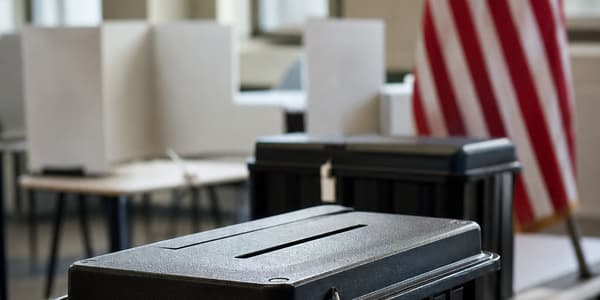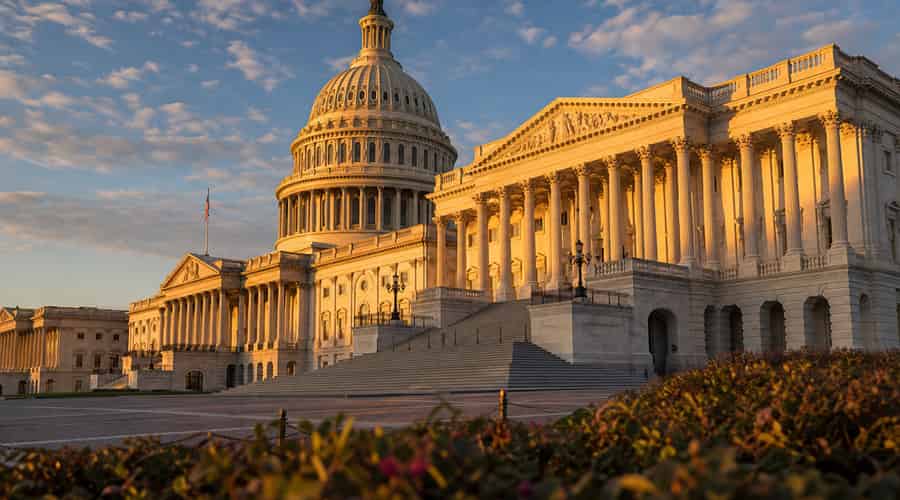
Sen. Susan Collins reversed course during a Senate vote-a-rama last week, giving the SAVE America Act 50 votes for the first time, though the citizenship verification bill still faces a filibuster wall with 10 more votes needed.
The Safeguard American Voter Eligibility Act hit a marker its supporters have been pushing toward since the bill cleared the House in February. During the marathon amendment session tied to the Senate's $70 billion immigration enforcement package, Collins broke from her previous opposition and voted yes on a version of the legislation introduced by Sen. Mike Lee of Utah, pushing the tally to 50 to 49, according to Fox News. It was the first time the SAVE Act had reached a majority in the Senate.
The bill requires anyone registering to vote in a federal election to present documentary proof of U.S. citizenship, such as a passport or a REAL ID-compliant driver's license that indicates citizenship status. The House passed the measure 218 to 213 on Feb. 11, with Republicans voting unanimously in favor, according to NBC News. Supporters say the bill closes a gap in current federal law. Opponents argue the requirement would make registration harder for millions of eligible citizens and that noncitizen voting in federal elections is already illegal and effectively nonexistent at scale.
Collins had been one of four Republicans who blocked the bill in an earlier amendment vote during the same vote-a-rama, joining Sens. Mitch McConnell of Kentucky, Lisa Murkowski of Alaska, and Thom Tillis of North Carolina in opposing a version offered by Sen. Lindsey Graham of South Carolina. That attempt fell 48 to 50 before Lee brought the clean House-passed text as a separate amendment. Collins' switch on the second attempt produced the new high-water mark, as Fox News reported.
Even at 50, the bill falls well short of the 60-vote threshold needed to break the Democratic filibuster. No Democrat has voted for the SAVE Act, and none has signaled any willingness to do so. That means the three remaining Republican holdouts and seven Democrats would all need to come around under current Senate rules, a combination that has not materialized in the months since the House acted.
Senate Majority Leader John Thune has consistently declined to push for changing the filibuster rules to advance the bill. "The votes aren't there, one, to nuke the filibuster and the votes aren't there for a talking filibuster. It's just a reality," Thune said, according to The Hill. His resistance has frustrated conservative activists and some colleagues who argue that Republican voters sent the party to Washington to pass exactly this kind of election integrity measure.
Collins drew a clear line in backing the bill: she supports the legislation on the merits but opposes eliminating the legislative filibuster to pass it. That leaves McConnell, Murkowski, and Tillis as the immediate pressure points. Whether Collins' switch moves either Murkowski or Tillis is an open question, but supporters are watching. If one of them flips, Republicans would be within reach of a simple majority, sharpening the debate over what procedural options Thune is willing to consider.
Leadership has not scheduled a standalone floor vote. Extended floor debate, sometimes called a talking filibuster, has been discussed as a pressure tactic that would require Democrats to hold the floor continuously or yield, but that option has not been acted on, according to reporting from The Hill and Votebeat.
California Gives the Fight Fresh Fuel
Supporters of the SAVE Act got a political tailwind from an unexpected direction. The extended count in Los Angeles's mayoral primary unfolded over days after election night and ultimately denied Republican candidate Spencer Pratt a spot in the runoff. Sen. Rick Scott of Florida said the drawn-out results proved the SAVE America Act was necessary to restore public confidence in elections, according to AllSides. Vice President JD Vance called the outcome "pretty shady to me," according to The Hill.
California election officials and the Los Angeles County registrar's office confirmed that the count followed standard state procedure and that Pratt received additional votes in every update batch. Trump-appointed U.S. attorney Bill Essayli debunked one viral social media claim about discrepancies in the count, calling it false, according to CNN, but his office simultaneously opened what it described as "multiple election fraud investigations" into California's elections and sent a federal prosecutor to observe the vote-counting center, as NBC Los Angeles reported. Even so, for proponents of the SAVE Act, the optics of a candidate falling out of contention during a drawn-out post-election-night count fit the argument they have been making about transparency and public trust in elections.
With 50 votes on the record and a California-driven news cycle amplifying the issue, the SAVE Act carries more momentum than it has since Thune deferred a standalone vote earlier this year. Whether Collins' switch loosens the three remaining holdouts, or forces a broader fight over the filibuster, will determine the bill's path heading into midterm season.
Also read: Pentagon flags Alibaba, BYD and Baidu as Chinese military companies • GOP senators back DHS threat to pull customs officers from sanctuary airports • Federal Judge Tosses Trump's $100K H-1B Visa Fee as Unconstitutional Tax